Five years ago, the wonderful Caitlin Thayer decided it was time to honor Twain's love of a good brew. In our archives, we have sales receipts for all manner of brews the Clemens family had delivered to their home-- mostly lagers-- and so, the staff here decided to celebrate in a style our dear Sam would have enjoyed.
That first year, we had a bunch of great breweries and a few great local restaurants. The food went so fast we had to order a huge batch of fresh pizzas in the middle of the party. The second year, we had tons of fabulous food, and the years began to blur together. Year three: perfect. Year four: perfect. The Hartford Advocate called Tapping Into Twain "absolutely, positively, without any doubt whatsoever, one of the best charitable events Hartford has beheld in quite some time."
This year, we've got many new breweries and restaurants-- from breweries that just opened this years, to longtime restaurants we've never landed before. Please join us for the fifth annual celebration of fun and frolic on Farmington Avenue. It's what Sam would have wanted.
Tickets: $45 in advance / $50 at the door $40 for MTH&M Members $20 for designated drivers ALL TICKETS INCLUDE BEER, FOOD AND A MARK TWAIN PINT GLASS!
Last year sold out, so call (860) 280-3130 or tappingintotwain.brownpapertickets.com as soon as possible.
As
the eyes of the world descend upon England for the Olympics, this country has
welcomed the Olympians, spectators, and tourists who have descended upon London
and the country at large. Yet, this country and its historic capital have drawn
the admiration and attention of the world through the ages, drawing in tourists
from across the world long before any Olympic torch was lit; one of these
travelers was Sam Clemens himself.
In
the summer of 1879, from Sunday, July 20th to Saturday, August 23rd,
the Clemens family toured England, beginning their visit in London. Like most
people encounter today, when the Clemens arrived in London, it was rainy and
cold (the exact same weather which encumbered the women’s bicycling and
volleyball competitions). Despite being in a new city, one of the first
activities for Sam was shopping for cigars and whiskey. It seems that even
across the Atlantic Sam couldn’t resist a smoke.
After
a smoke and some touring, Sam met one of England’s iconic writers, Lewis
Carroll, author of Alice’s Adventures in
Wonderland. It seems, however, that Sam wasn’t a fan, for he wrote that “he
was only interesting to look at, for he was the stillest and shyest full-grown
man I have ever met except ‘Uncle Remus.’”
With
the end of his visit with Carroll, the
Clemens ended this brief London stay, moving to North Shropshire for some rest
and relaxation on the coast. After this stay, the family moved back to their
base of London, touring the main sites, like the National Gallery of London and
the Royal Aquarium. At the conclusion of these visits the family went to hear
the Baptist Preacher, Charles Haddon Spurgeon speak, and while today this may
not be considered a main attraction, listening to sermons was vastly popular
back in the days of the Clemens. Sam’s questioning and controversial attitude
towards religion came out here as well, for he commented that they all were “A
wooden-faced congregation—just the sort to see no incongruity in the Majesty of
Heaven stooping to beg & plead & sentimentalize over such, & see in
their salvation an important matter.”
This
ended their stay in London for the rest of the duration for the trip, for the
Clemens then traveled to the Lake District, a place that has inspired many
English writers such as Wordsworth, Coleridge, and Southey, together known as
the Lake Poets. Here, however, Twain did not talk literature, for evolution was
more at the forefront for here he met Charles Darwin. After their stay in the
Lake District, the Clemens sailed back to New York, ending their tour of
England.
This
tour of England was not the only for the Sam Clemens, who returned multiple
times on speaking tours. While one hundred and thirty three years later, the
England Sam visited has altered with time, it, as well as London, still remain
a main center for visitors across the globe.
-- Sam Nystrom, Twain House Summer Intern
*All
information from Mark Twain Day by Day:
An Annotated Chronology Of the Life of Samuel L. Clemens, Volume One
(1835-1885) by David H. Fears
Summer
is a time for traveling, taking trips, and simply taking part in fun activities. One such popular activity is Summer Music
Festivals. Everywhere you look these
days there are outdoor concerts and festivals happening. One might think that this tradition is something
that recently came to be popular, but that is not the case. Music festivals were very popular during the
Clemens’ time, though the musicians and the music itself were quite a bit different
than what people are listening to today.
Instead of hip-hop or pop music, they were listening to classical
operas. On Friday,
July 31, 1891, the Clemens party started traveling to Bayreuth for the Wagner
festival, which they arrived at the next day, on August 1, 1891. This festival was a huge deal-- such a popular
event that the Clemenses had to reserve their tickets a year in advance.
This
festival was put on by Wagner’s widow, and included over 141 singers and an
orchestra almost 100 strong all performing Wagner’s incredible compositions in
his own home! This event was one of such
importance that the Hartford Courant reported on it. “At Bayreuth the rehearsals for the Wagner
festivals are now being pushed forward very actively. The actual performances will begin on Monday,
July 19, and will be on the usual monster scale which is so pleasing to the
devotees of the music of the future.
Thus no fewer than 141 singers will be employed, and there will be in
addition sixty-four ballet girls and dancers.
The orchestra, which is natural the exceedingly important factor in the
presentation of these music dramas, contains thirty-two violins, two violas,
twelve violincellos, eight bassos, five flutes, five oboes, five clarinets,
five flageolettes, two trumpets and cornets, four harps and two drums.” (Hartford
Courant, July 21, 1891).
This
festival was great fun for the Clemens family, because though Sam did not love
opera, everyone else in the family did, especially Susy and Clara. Sam was much more interested in the parties
and dining out in Bayreuth as opposed to the operas, being that he was more of
a spirituals man himself. Sam often left
the opera early so that he could secure good seats for the family at dinner, as
well as getting himself out of having to sit through the entire opera.
Though
the music may have changed, the sentiments and fun that are behind these events
still hold true. Going to see music of
any kind with family is fun, particularly if there is a party afterwards-- at least for Sam.
Driving to The Mark Twain House & Museum, one can hardly fail to notice the ongoing construction on Farmington Avenue. Fixing our roads, the construction workers are bearing the unbelievable heat to help create a future of smoother commutes. While in this day and age constant construction during the summer months is common, if not expected, for Sam Clemens, even the most minor alteration to his local pathways was a cause for complaint, even when he was hundreds of miles away.
On Thursday, July 19th 1888, from Elmira, New York Clemens wrote a comically scathing note to Franklin G. Whitmore critiquing the City of Hartford’s audacity to move an electric lamp and post that resided on Forest Street. In this letter, Clemens writes:
"For fifteen years, in spite of my prayers & tears, you persistently kept a gas lamp exactly half way between my gates, so that I couldn’t find either of them after dark; & then furnished such execrable gas that I had to hang a danger-signal on the lamp-post to keep teams from running into it, nights. Now I suppose your present idea is, to leave us a little more in the dark out our way, so that you can have another light to stick in front of the granite shell of the Catholic Cathedral. Or maybe you want to add it to the Park lights, so that strangers can see the open sewer you maintain there . . . Please take our lonesome electric light & put it where you please. Put it down town by old Daniel’s dam, where you can count the catch of dead cats & forecast the rise of real estate in the cemeteries. Yours, in indestructible affection, S.L.C., Farmington Ave."
Clemens was insistent that his complaint be printed for he ordered Whitmore to post this note in the Courant without any apologies or alterations for his biting editorial, and if the Courant refused, then to go to the Hartford Times. If both of these routes failed, Clemens insisted Whitmore take it to William Mackay Laffan, who he hoped would print it in the New York Sun. Unfortunately for Sam, neither of the three papers would print his piece and his complaint was never printed for the world, and especially the City of Hartford, to see.
While this failure to print was unfortunate for Clemens, for us residents of Hartford today, perhaps it was for the best. Who knows what the results of this note would have meant for future public works on Farmington Avenue. Perhaps Farmington would not be getting repaired at this very moment, but would have been left to crumble in retaliation for Sam’s disrespect. Lucky for us, we’ll never have to know.
-- Samantha Nystrom, Twain House Summer Intern
*All information is from David h. Fears’ Mark Twain Day by Day: An Annotated Chronology Of the Life of Samuel L. Clemens, Volume Two (1886-1896)
Sam
Clemens lived in an era where Spiritualism was prevalent in all areas of
life.Many dinner parties of the time
had mediums for entertainment.It was
seen both as a party activity and as a way to deal with the losses from the
Civil War, particularly the Gettysburg Battle in which hundreds of thousands of soldiers were
killed.Spiritualism was a way for
people to not have to entirely give up their lost family members, a way for
them to stay in touch.The great losses
that came about as a result of the Civil War also brought about a newfound
popularity of Spirit photography.These
photographs claimed to capture a spirit in the background of a photo of their
loved one.One such photo is of Mary Todd Lincoln with the spirit of her husband, Abraham Lincoln behind her.
Clemens first started to be actively
involved in the Spiritualism movement when he moved to San Francisco in 1864,
where there were a huge number of people who believed in spiritualism. He started writing about spiritualism in many
articles, which were later republished in a newspaper called, The Golden Era, in 1866. He then started to go to Pellet Readings with
Ada Foye, who was a famed spiritualist.
These Pellet Readings would include putting many names on balled pieces
of paper into a hat and then writing a name on a piece of paper and then
pulling out the pellets until they reach the person that they are called to,
supposed to be the same name that the spiritualist wrote down. Sam believed that these Pellet Readings were
legitimate and did not find any untruthfulness to the first one he attended or
any of the others that followed.
Spiritualism was not only popular in
San Francisco; the Nook Farm area was populated with many people who deeply
believed in ghosts. Harriet Beecher
Stowe had many conversations with Charlotte Bronte through a medium, and later
wanted to write articles about these conversations. The Cheney’s would host many parties all the
time, hosting mediums for the entertainment for the party guests.
Then in the 1880’s furthering his
interest in Spiritualism, Sam joined the Society for Psychic Research. In
addition to Sam’s many other connections to Spiritualism, no one can deny the
strangeness of his being born and dying both times when Haley’s Comet came. This renewed interested in spiritualism for
Sam could have been tied to Suzy’s death, because she was the first of his
children to die. Sam continued to feel a
connection to all of his daughters even after they died. Sam was said to
have felt a cool breeze in the bathroom, which was where Jean died.
All these connections that Sam had
to spiritualism has had its impact on the house, because today many people are
said to have felt various spirits in the house.
Come to the Ghost Tours this month to find out!
-- Cassandra Saimond, Communications Intern
Graveyard Shift Ghost Tours
Friday, July 27, 6 p.m., 7 p.m., 8 p.m., 9 p.m.
Friday, July 27 and Saturday, July 28! Reserve early to get a spot on these limited and popular tours -- they're routinely sold out in advance.
Reports of ghostly apparitions, mysterious bangs, cigar smoke and other unexplained phenomena, featured on Syfy's Ghost Hunters, have led us to reprise these popular tours. Hear these creepy tales -- and learn about Mark Twain's own interest in the supernatural. Spiritualism and ghostly tales were a big part of the Gilded Age, an age of uncertainty, rampant materialism and credulity much like ours.
The tours are tsponsored by Tsunami Tsolutions.
Tickets - $20 / $16 for MTH&M Members / unlucky $13 for children 16 and under (not recommended for kids under 10). Reservations required. Call (860) 280-3130.
Judy Blumewill be speaking at the University of Hartford on June 21st as a fundraiser for The Mark Twain House & Museum. Our Communications Associate, Julia, will be interviewing her onstage and taking tons of audience questions. In preparation, I will be reading her complete works and blogging about the experience. Get your tickets here.
Julia has been reading the complete works of Judy Blume in her spare time, and blogging about each installment over at her blog.
Here's a bit of what she had to say about Are You There God? It's Me, Margaret:
"If you haven’t read it, Are You There God, It’s Me, Margaret encompasses one sixth-grade year in the lives of Margaret, Nancy, Jane, and Gretchen. In its pages it contains a huge amount of little moments that ring true to any twelve-year-old-girl, such as:
“My mother went to the counter and told the saleslady we were interested in a bra. I stood back and pretended not to know a thing. I even bent down to scratch a new mosquito bite.”
Yup. That was me, every time my mom took me anywhere that was deeply important to me. Moms. How do they always know what to do, even when we’re completely silent on the matter?
But despite the popular fact that this book directly addresses the anxieties girls have around periods, bras, boob development (we must, we must, we must increase our bust), seven minutes in heaven (I’m suddenly wondering if the continued prevalence of this game is entirely due to the prevalence of this book), the complex world of female friendship, and boys in general, the real subject of this little novel is religion.
Margaret is half-Jewish and half-Christian, but since religion detroyed her parents’ relationships with their families, she is raised as “No religion.” (Her words.) She prays– see the title– conversationally, asking for no one to find out she’s put six cotton balls in her training bra. She embarks on a quest, a school project to find out what church and temple are really like, and she talks to God about these things with a sincere directness that rang true to me, and, I suspect, to a lot of other young girls.
Are you there God? It’s me, Margaret. I just came home from church. I loved the choir– the songs were so beautiful. Still, I didn’t really feel you God. I’m more confused than ever. I’m trying hard to understand but I wish you’d help me a little. If only you could give me a hint God. Which religion should I be? Sometimes I wish I’d been born one way or the other.
Her parents and grandparents, as in all Judy Blume books, are drawn carefully and with complexity. They have adult conversations right over Margaret’s head, with some lines I’m sure I did not understand when I was ten:
(Margaret’s father, raised Jewish, angrily explaining why his wife’s Christian parents suddenly want to visit after a decade of estrangement:) “They want to see Margaret! To make sure she doesn’t have horns!”
Margaret thinks, during another adult conversation: “I didn’t want to listen anymore. How could they talk that way in front of me! Didn’t they know I was a real person– with feelings of my own!”
Judy Blume is the first author whose name I remember knowing. These books were written by a person who had given them quite a lot of thought. She had a lot of answers, Judy did, and she wasn’t afraid to ask a lot of questions without answering them.
It’s easy to talk about puberty– or religion– or friendship– or love– or school– to just about any woman you are close to. It’s easy to think about these things, and how they affect our lives, one at a time. But we often forget as adults, when the years start to run together and our resolutions are singular and often small (“this year I’m going to lose twenty pounds,” or “this year I’m going to get a promotion”), that when you’re twelve, everything happens at once. You move to a new town and your body changes, your friends change, your religion is called into question, you start kissing people, your grandparents and
your parents have all sorts of expectations of you. Every school year, you remake yourself, willingly or unwillingly.
Nothing really happens in this book. There is no divorce, no drama, no death, no magic, no breakups. But it doesn’t need them. For a twelve-year-old girl, just living through the year is a story all its own."
Our Communications Associate, Julia Pistell, is moderating the Judy Blume Clemens Lecture on June 21st at the University of Hartford. To prepare, she's decided to do a complete read-a-thon of Judy's work. See her reasons below and follow her progress daily over at her blog.
During Banned Book Week last fall, my coworker Mallory and I got to talking about our favorite censored authors. There are, of course, the high-profile scandals– Salman Rushdie, J.D. Salinger, and of course, my employer, Mark Twain. Lots of people are also aware the Harry Potter series has been widely banned for promoting an evil lifestyle (wizardry is so insidious, isn’t it?).
Major fans of Banned Book Week, however, know that the big stars of the censorship discussion are children’s book authors. If only I could tell Madeline L’Engle, who died in 2007, what a profound effect her strange books about physics and faith had on me. If only I could tell Dr. Suess, who died in 1991, how much of my moral compass was formed by the boldness of his work. If only I could tell Shel Silverstein, who died in 1999, how fabulous his bizarreness was, and how it opened a lot of dark and awesome avenues in my young brain. If only I could tell Judy Blume…
Oh, wait. I could. Judy Blume is alive and well and actively speaking against censorship at every chance she gets. (See my post about heroes a while back– I think I finally have an answer.)
So I decided I would tell her. She’s very active on twitter– she tweeted eight times on Thursday, talking to her fans, talking about how much she, too, loved Beverly Cleary (also still alive), telling us what she’s writing, and chatting about the hilariousness of spray on makeup. She’s great. She always was, and she still is.
So I wrote Judy Blume an email asking her to come and visit us at the Mark Twain House. As I was writing it, I began to get very emotional. I realized that because of Judy (and all the aforementioned authors, as well as several more), I loved to read from a very early age. And because I loved to read I loved to write. And because of both of those things, I have this blog, I have this podcast, I have a BA in Literature and an MFA in Writing, and I work at Mark Twain’s house.
I said all this in a weepy yet, I must assume, professional email. We send these sorts of requests out all the time– at least twice a week. The response rate is perhaps 2%.
But Judy responded. Responded saying she wanted to come. As my coworkers can describe, I melted away with joy and have been overjoyed ever since. It was a secret for a long time, that Judy was coming, and now it’s been announced, and every time I tell a person between the ages of twenty and forty-five, they too melt away. We will sell many tickets to our Judy Blume moderated discussion. But it gets better.
I’m the moderator.
Judy and I, hanging out on stage, talking about books and writing and censorship and Twain and who knows what else. I can’t wait. It’s going to be on June 21st and you can find out more event information here.
So, in order to prepare, I’m going to be reading the entire collected works of Judy Blume. I already have them all (there may or may not have been a buying spree online moments after finding out I was moderating). The best part is: I’ll be writing a little blog piece about each and every one, mulling them over and coming up with my discussion questions. And you, dear readers, can help me, if you’d like.
If you’re not familiar with her writing, I promise you it is worth an academic look. It’s incredible to think about the sheer number of children’s anxieties and problems that she wrote about. (This is why she was banned.)
I can’t wait. I hope you can’t either. Keep a look out for the “Blume-a-thon” tags in my posts. And see you on June 21st.
In 1905, Mark Twain published something surprising. His work in his later years tended more
toward the critical and the vitriolic.
This piece was tender, heartfelt, innocent and emotional. Having suffered the loss of his beloved wife
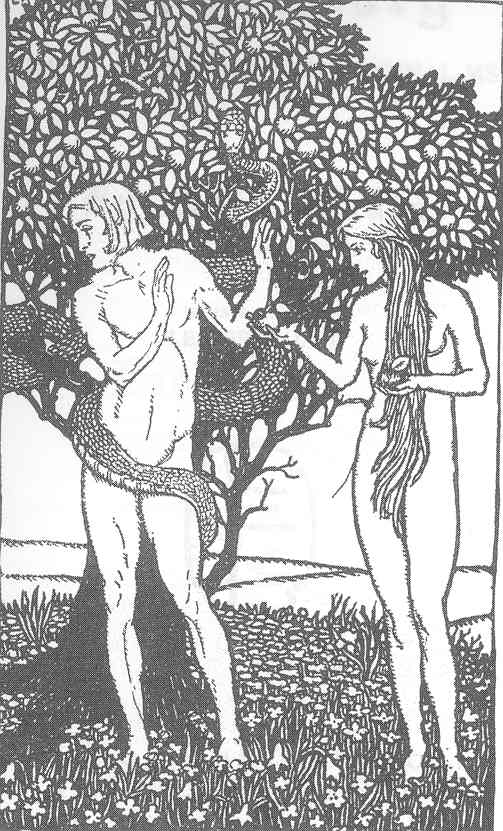
Livy in 1904, Samuel Clemens reflected on his Edenic married existence in Eve’s Diary.
First found in the Christmas issue of Harper’s Magazine, Eve’s Diary was a short companion piece to his
earlier comic story Extracts from Adam’s
Diary. A light comic burlesque on
the Book of Genesis, Adam’s Diary focused
on the grouchy chiselings of the first man vis-à-vis the troublemaker who
sprung from his rib. Eve’s Diary shows the first woman to be
more open, honest and, frankly, smarter than her companion, and his life is all
the better for her being there.
It is fitting, then, that The Mark Twain House & Museum
in collaboration with the HarrietBeecherStoweCenter and the World Affairs Council
of Connecticut, welcome another open, honest and smart Eve to our little corner
of the globe on May 6th at Manchester’s
Cheney Hall. EVE ENSLER is, in many
ways, the Darwinian evolution of the Bible (and Twain’s) Eve.
Where Twain’s Eve is willing to endure much abuse out of
love for her husband, Ensler has become an outstanding advocate for the world
to end abuse against women. Where
Twain’s Eve will often sublimate her intelligence to make her male counterpart
seem brighter, Ensler fights for women to own their intelligence and rebel
against social and political patriarchies.
Where Twain’s Eve relentlessly pursues Adam, one cannot help but feel
Ensler would say, “Enough of this!” and move to her own corner of Eden.
There are, however, indicators that Ensler and Twain’s Eve
are still soul-sisters. They both share
an inordinate amount of compassion for other living beings. They both love openly and unashamedly. Both Eves are incredibly inquisitive and are
not afraid to talk about their feelings.
And, they both write.
Maybe the biggest area of evolution comes with the concept
of original sin. Twain, perhaps in
deference to his sainted wife, avoids mention of “the fall” in Eve’s Diary. Eve’s consumption of the
apple and the subsequent banishment from Eden
are skipped over in her diary. Maybe he
is assuming that this topic was adequately covered in Adam’s Diary:
“She says the snake advises her to try the fruit of that
tree, and says the result will be a great and fine and noble education. I told her there would be another result, too
– it would introduce death into the world…I advised her to keep away from the
tree. She said she wouldn’t. I foresee trouble.”
Of course, Eve eats and then tempts Adam, subsequently
blaming him for their downfall. And, of
course, they cover up their genitalia with fig leaves out of a nascent sense of
shame, something heretofore unknown in the Garden of Eden, a paradise from
which they are about to be expelled.
Ensler has, famously, ripped off the fig leaf covering
women’s vaginas with her (in)famous Vagina
Monologues. She cries out against
the mutilation of women’s genitalia and forced rape. She has refuted that eating from the Tree of
Knowledge is a bad thing. She repudiates
Adam’s curmudgeonly responses to Eve’s feelings with I Am an Emotional Creature: The Secret Life of Girls Around the
World. She has sought to eliminate
women’s sense of shame regarding their sexuality, their bodies, and, most
importantly, their minds. She has fought
to create a better sense of parity between the genders.
One gets the sense that maybe this Eve wouldn’t have lasted too long in Eden. Rather than resting on her laurels as an artist, Ensler has become a world-renowned activist, advocate and agitator. From Adam’s Diary:
“About an hour after sunup, as I was riding through a
flowery plain where thousands of animals were grazing, slumbering, or playing
with each other, according to their wont, all of a sudden they broke into a
tempest of frightful noises, and in one moment the plain was in a frantic
commotion and every beast was destroying its neighbor. I knew what it meant – Eve had eaten that
fruit, and death was come into the world.”
Ensler’s efforts to halt violence against women and to
celebrate the female body and spirit have taken her to some of the most
war-torn parts of the globe: Afghanistan, Bosnia,
the Democratic Republic of
the Congo, to name a few. In effect, Ensler chooses to live in the
world and change it rather than retreat to a Club Med-style Eden.
Instead of bringing death into those worlds, this Eve seeks to promote
peace, life, love and education. These
are goals that, in the end, are shared with Twain’s take on the biblical
Eve.
We welcome both Eves back to the Garden with the quote Twain
uses to end Eve’s Diary, tellingly
written in the hand of Adam:
“Wheresoever she was, there was Eden.”
An Evening with Eve Ensler at Cheney Hall, sponsored by The
Mark Twain House & Museum, the HarrietBeecherStoweCenter and the World
Affairs Council of Connecticut is Sunday, May 6th at 7:30 p.m. Tickets are $45. A special ticket with VIP seating and a
pre-lecture reception with Eve Ensler is $75.
Tickets can be ordered by calling (860) 647-9824. There will be a book signing following the lecture.
"I Am an Emotional Creature" is Hartford Public Library's One Book - One Hartford selection for 2012.
As you may or may not be aware, The Mark Twain House & Museum is presenting Judy Blume at the University of Hartford on the evening of June 21st. We're very excited to have her here-- we'll be interviewing her live onstage.
We'd love to include some of your questions (and, of course, your favorite Judy Blume memories), so please tell us-- if you could ask Judy one question, what would it be?
And which of her books do you love the most?
And do you remember where and when you read them?
Leave your memories and questions in the comments, and we'll refer to them as we prepare. Who knows; maybe we'll ask Judy YOUR question.
APRIL 20-21: A Writers' Weekend at the Mark Twain House will offer talks, workshops and other events devoted to the craft of writing and its practitioners.
Novelists, authors of non-fiction, poets, memoirists and playwrights will be supplying a rich array of events. Participants include Lewis Lapham, Jon Clinch, Alfred Uhry, Bessy Reyna, Lary Bloom and A.R. Gurney.
The Friday-Saturday event begins with an April 20 early-evening reception followed by a keynote speech by legendary editor Lewis Lapham of Harper's and Lapham's Quarterly.
On Saturday, there's a kickoff talk by novelist Jon Clinch (Finn, Kings of the Earth), a panel including playwrights Gurney (The Dining Room) and Uhry (Driving Miss Daisy), and nearly a score of workshops, talks and other sessions.
The event will run from 8:00 am to about 6:00 p.m.on Saturday. A box lunch will be provided, and the event winds up Saturday evening with a closing reception.
The cost of the Writers' Weekend for participants is $100. This includes the Friday night reception and lecture, all Saturday sessions, a box lunch and the Saturday night closing reception. Participants will also receive a voucher good for a tour of the Mark Twain House at any time. Space is limited, and advance registration and payment is a must: Call 860-280-3130 to register.
Eighteen panels, talks and workshop sessions will take place Saturday. No fewer than two winners of the Connecticut Book Award Lifetime Achievement Award holders will be participating in sessions at the Weekend: Lary Bloom, longtime editor of Northeastmagazine, columnist, author of many books, and sage teacher of writing at the Mark Twain House and many other places; and Bessy Reyna (Memoirs of the Unfaithful Lover), the beloved Cuban-born poet who has been called "a clear-eyed guide to the world we see but don’t see" by Martin Espada.
Among the authors slated to lead 50-minute sessions on Saturday are Susan Campbell(Dating Jesus), Susan Schoenberger (A Watershed Year) Suzanne Levine (The Haberdasher's Daughter), Denis Horgan (Ninety-Eight Point Six) Cindy Brown Austin (By the Waters of Babylon) and Wendy Clinch (The Ski Diva).
There will be sessions on blogging, the business of getting published, and new forms of storytelling unleashed by the existence of the Internet.
The Writers’ Weekend builds on the success of Writing at the Mark Twain House, the writing program that bears out The Mark Twain House & Museum's explicitly stated mission, promulgated in 1955, to develop a literary center. The program has offered fall and spring evening courses in memoir, non-fiction, and fiction over the past few years.
During the Writers' Weekend, a panel of faculty and students in the Writing at the Mark Twain House program will be discussing the ins and outs of teaching and learning writing.
Race, Rage & Redemption Film Series kicked off with The Birth of a Nation.
With the announcement of The Mark Twain House & Museum’s
Race, Rage & Redemption film series, the selection that has drawn the most
shock and concern is, surprisingly, almost 100 years old.One could not rightly say that D.W.
Griffith’s The Birth of a Nation (screened on April 4th) is polarizing in the way that Spike Lee’s Do the Right Thing, a film we will be screening on June 13th, divides
audiences.There is no doubt that
Griffith’s three hour silent film is an epic piece of moviemaking.The Birth of a Nation has been inducted
into the Library of Congress’s National Film Registry.The American Film Institute declared it one
of the top 100 films of all time.Until
the release of Gone with the Wind, it was the highest grossing film ever
making $10 million and by 1950, it had earned $50 million total.It was the first film in American History to
be screened in the White House, for President Woodrow Wilson.
Much like Harriet Beecher Stowe’s Uncle Tom’s Cabin and
Mark Twain’s Adventures of Huckleberry Finn, The Birth of a Nationwas hugely popular and provoked controversy
upon release.While Stowe’s Uncle Tom’s
Cabin supported the abolitionist cause and Twain’s Huckleberry Finn decried the
backwards Jim Crow Era, the controversy surrounding this movie is the naked
racism on display.Blackface, examples
of blacks as drunken and sexually aggressive brutes, and the glorification of the Ku Klux Klan make this
landmark film a rarity today.Of course,
the fact that the movie is silent and runs slightly over three hours does not
help.
Founded in 1909, the NAACP protested the film’s release in
1915 with pickets and boycotts.The
movie was banned in some cities and incited riots in others.It emboldened gangs of white men to attack
blacks and is believed to have been the cause of a murder of a black teenager
in Indiana.The most damaging result of
the film was likely the use of the movie as a recruitment tool for the
KKK.Some believe it inspired the group
to reorganize in the 1920s after a post-Reconstruction lull.He adapted the film from the 1905 novel and
play, “The Clansman: An Historical Romance of the Ku
Klux Klan”written by Thomas Dixon, Jr., a Baptist Minister,
playwright and state legislator.The
book, and its subsequent play,were written as a warning to Northerners against
desegregation, portraying blacks as brutes and the KKK as necessary for law and
order.
D.W. Griffith’s father was a colonel was in the Confederate
Army.In a newsreel, when asked, “When
you made The Birth of a Nation, did you feel as though it was true?”Griffith responded, “The Klan at that time
was needed.It served a purpose.Yes, I think it’s true.”One year later, chastened by the protests and
backlash, Griffith released the anti-prejudice film, Intolerance.Of his masterwork, The Birth of a Nation,
film critic and Mark Twain fan Roger Ebert says the following:
“"The Birth of a Nationis
not a bad film because it argues for evil. Like Riefenstahl’sTriumph of the Will it is
a great film that argues for evil. To understand how it does so is to learn a
great deal about film, and even something about evil."
Two other interesting facts: a sequel was released in 1916, directed by
the Klansman novelist Thomas Dixon, entitled, The Fall of a Nation. No prints are known to exist. On May 17th at 7:30 p.m., The Mark
Twain House & Museum and the Harriet Beecher Stowe Center will present
“Rebirth of a Nation,” a remixed look at D.W. Griffith’s racist film. With a hip-hop and electronic score by artist
DJ Spooky, the film is 100 minutes long and will be preceded by a lecture with
DJ Spooky himself and a Q&A. We hope
you will join us on May 17th. Tickets for the DJ Spooky lecture and screening of Rebirth of a Nation are on sale now at (860) 280-3130.
As you all know, we sometimes come up with nutty events here. While we work hard to present many exhibits and excellent educational programs, sometimes we want to just let our hair down and use our resources in a fun way that will draw new visitors to the house. Or, of course, pull back our members and repeat visitors to enjoy the house in a new way. That's why we initially started up our Graveyard Shift Tours (spooky nighttime tour with information on Victorian seances, and mysterious happenings in the house), and that's also why we decided to do "Get a Clue" tours, which are based on the wonderful board game Clue.
The tours launched this past weekend, and were such a success that we think we'll do them again over the summer. Let's give you a tour of some of the suspects... (pictures by Summar Elguindy of Sea Tea Improv!)
Was it the Connecticut Yankee in the Drawing Room with the baseball bat?
... or maybe that CT Yankee was acting suspiciously in the conservatory?
Huck Finn in the Hall? His only weapon here seems to be an indomitable spirit.
The Duke in the Billiards Room with the Rope. He seems to be taking it oh-so-seriously.
Becky Thatcher in the Library with the Lead Pipe is the scariest Becky ever.
Katy Leary, the Clemens maid, is not really a suspect-- but she's inviting you into this house of mayhem.
Aunt Polly & The Prince/Pauper seem to have formed a cross-book friendship in the Bedroom, but what you can't see is that she's got a Revolver in her apron, and he's got a Knife under that crown.
Queen Morgan Le Fay: The Wench with the Wrench takes a second to check herself out in mirror by the Schoolroom .
Murders all over the place!
... but what would it all be without Muff Potter, normally hanging around the Kitchen looking for booze? We know from Tom Sawyer that he's harmless, but... everyone's a suspect.
Keep an eye out for our next installment in July! (Exact dates TBD.)
One of the loveliest perks of being a popular and beautiful historic site is the adoration of the public. For years, we've had our guests and local residents beg to hold small weddings here. However, our staff was too small and the schedule too inflexible to take on any weddings.
But hark-- that day is over! We are now taking requests for weddings at The Mark Twain House. To kick off this new era of romance, we're partnering with estOccasions to bring a full-scale bridal event to the museum center. They'll be bringing in vendors of all kinds-- florists, caterers, photographers, the whole shebang. If you get your ticket online, it's free, otherwise it's a $5 donation at the door (which goes straight to the Twain House, so it works out great either way).
Come by and see if you love the Twain House enough to marry it. Whoops, we mean marry at it. Freudian slip there. We love you, Sam Clemens!
Did you know that two of the staff members of the Mark Twain
House & Museum are firmly ensconced in the comedy world?
Jacques Lamarre, the Director of Communication and Special
Projects, is not only a playwright, but co-writes sketches, plays, and movies
with the hilarious Varla Jean Merman. Here's a sample of one of his
co-creations.
Not only that, but Communications Associate Julia Pistell is
a founding member of Sea Tea Improv, a professional theatrical company that
focuses mainly on improv comedy. With other members of Sea Tea, Julia was
featured in a Funny or Die video (written by Sea Tea Improv member Kate
Sidley).
You'll have a chance to see more from Jacques, Julia, and many
others this upcoming weekend. From Friday, February 24th through Sunday,
February 26th,The Connecticut Film Festival presents three days of short, funny
films, workshops, and parties.
When the festival was looking for a place to screen the best
comic short films, the home of America's
favorite humorist seemed like an ideal choice!
Join us Feb 24 through 26 for the funniest, naughtiest and
downright crazy short comedies.
Tickets for this East Coast Encore of the LA Comedy Shorts
Film Festival, supported in part by FunnyOrDie.com, are on sale now.
Purchase an all-access festival pass, day passes or
individual screenings or workshops. Rub elbows at our industry mixer or be
there when we honor Mike Reiss, the Peabody and Emmy Award-winning writer for
The Simpsons. Friday night will also feature local filmmakers, including Hartford's newest
sketch-writing team, Asylum Attic. They've cooked up a new movie: come by on
Friday at 8:30 to see what they've come up with. Here's one of their oldies:
Visit ctfilmfest.com for the complete schedule, tickets and
info. See you this weekend!
So, you want to be a writer. In fact, you're "supposed" to be writing right now, but you're trolling the internet for your favorite literary sites (physical and virtual). Let us help you get back on the writing wagon by reminding you that the registration deadline for our memoir class with Lary Bloom and Suzanne Levine is coming up.
Call Steve Courtney's desk at (860) 247-0998 extension 243. He'll tell you all about the eight-week course, which runs on Wednesdays, March 7-April 25, 5:30 to 7:30 p.m. The class is
held in the MarkTwainMuseumCenter, 351 Farmington Avenue, Hartford. One session will be held in Mark
Twain's library in the historic house. (Feel the literary vibrations!)
Watching Lary Bloom and Suzanne Levine teach their
extraordinary joint class in memoir writing is a study in complementary
creativity -- each teacher's style is so different, yet each builds on the
other's work with grace and precision.
First there's Bloom -- eloquent, reminiscent, funny,
surprising, with a real skill at drawing out the stories that the members of
the class have often kept within themselves. Then there's Levine, who will
gently rein in her co-teacher and partner with a quiet reminder that puts the
class back on track. She, it's clear, revels in his ebullience; he revels in
her skill at keeping to the rails.
And both teachers apply themselves with diligence and
generosity to the work of their students, whether novices or Connecticut Book
Award winners. Participants make real progress. "My first drafts usually
seemed to please people, so I didn't need to go any further," said one
student after taking the class. "Now I have your voices in my head and
they won't go away."
Bloom and Levine will offer their famed eight-week Class in
Memoir once again this spring at The Mark Twain House & Museum, the third
time around for this much-waited-for event.
In 2010 the memoir class started the museum toward the
fulfillment of its long-held goal of being a center for writing. This effort --
Writing at the Mark Twain House -- has blossomed since, with classes in fiction
and non-fiction, individual talks and workshops by a range of writers, and a
Writers' Weekend planned for April 20-21 this year.
A Class in Memoir offers writing instruction and workshops
at the home of one of the American masters of the craft. The class will include
intensive, hands-on work on the craft, with the goal of producing a short work
by the end of the session to be published on the Writing at the Mark Twain
House Blog. It will explore such aspects of the memoir craft as scene-setting,
dialogue, character development and narrative.
It's a particularly appropriate genre for the home of Mark
Twain, whose Autobiography, released recently after a century under wraps,
became a surprise bestseller.
Our intrepid curator, Patti Phillipon, has changed the setting in the dining room table. We change the table settings often to reflect the season, or some historical element that we would like to highlight on our tours. This change is no exception. We thought you, dear readers, might like some inside knowledge on how and why we curate certain aspects of the house. Ready to put your history-caps on? (Then take them off-- you're going into a party with ladies, for heaven's sakes.)
The dining-room, where the party took place
The new table setup is based on a letter written by Margaret (Daisy) Warner to her father, dated Hartford,
March 20th, 1887.
“Susy Clemens was
fifteen years old yesterday [March 19, 1887] and she had a lovely party. The two Twichell girls, Mary and Hattie
Foote, Cousin Lilly, Ward Foote, Hattie Whitmore, and Fannie Freese, and Lucy
Drake, and I were all there to supper.
Mrs. Clemens had her beautiful big, round dinner table, and at each
place was a lovely bunch of beautiful roses. Three or four at each place, and we all put
them on. And also, at each place was a
lovely little glass dish of candy, tied around with pretty ribbons and a little
Japanese card with our names on it, on the top of the dish. In the middle of the table, was a kind of
pyramid of nasturtiums and then there were other vases, of roses. And those tall silver candles were on the
table, too and the whole thing was so lovely… We then had soup, then
turkey, and with it some little potato-cakes and jelly – Then salad, and then
straw-berries and ice cream, and cakes (lady-fingers etc.) and then the big
birthday-cake was brought on, with fifteen lighted candles. It was very pretty. Of course we had some of it; and then we had
fruit and candy. After supper we danced
and had charades. Mr. Clemens read some
“Uncle Remus” to us and Mama and Frank, and Aunt Lottie, came in after
supper. And altogether we had a
DELIGHTFUL time."
The table is set for eight guests a
la Russe. This means that there
would be no food on the table when the dinner guests arrived. Food would be served either from the
sideboard or brought out from the kitchen, and be presented to the diners. In our setup, the turkey stands on a side table
waiting to be carved and served. The “little Japanese cards” on the table have the names of 8 of the children
who attended the party – Susy, Daisy, Susan Twichell, Julia Twichell, Mary,
Hattie, and Ward Foote, and Fannie Freese. We don't have quite enough room to fit all eleven mentioned place settings in-- if we did, there'd be no room for tours to go through. So if you're coming through this season you can simply imagine yourself as guest number nine. Don't touch the collection objects, though!
The dinner plates are Wedgwood bone
china, dated approximately 1895. The
glasses are Bohemian cut crystal with etched poppy designs on the body, foot
and rim. They were purchased in Europe – not by the Clemens family -- during the 1880s or
1890s. We are showing the water glasses
on the table.
The majority of the silverware is the Gorham
“Rosette” pattern introduced circa 1867 and sold by Tiffany & Company. They are engraved “Olivia L. Langdon” on the
handles. The knives, which are of a
different pattern, have mother-of-pearl handles. According to one source, “…knives were not
always considered part of a flatware service before the 1890s…Knives, with
mother-of-pearl, silver, ivory, or plastic handles, were often sold separately,
although they could be obtained with a set.”
A large cake for the dessert course is shown on the
sideboard, which would have been typical for the time Cake and sweets were popular
and often served at children’s birthday parties, as shown in both Daisy
Warner’s letter and the attached photo of a Victorian children’s party. Other parts of the dessert (strawberries and
candy) are in the Butler’s Pantry waiting to be brought out.
In the library, on the small table to the left of
the fireplace, is a copy of Uncle Remus.
Sam read excerpts from this book to the children following the dinner
party. The reason we're putting up this table setting, and its accompanying details, a couple of months early is that we're talking about Uncle Remus in our upcoming exhibit, A Sound Heart and a Deformed Conscience.
On the center table of the main room are all sorts
of tools used to bake Susy’s birthday cake (mixing bowls, wooden spoons, eggs,
egg whisk, and more). On the small table
under the windows is a basket of nasturtiums and roses that are also seen on
the table. There is an additional
corsage of roses being put together. On
the stove, potatoes are boiling in a pot for the potato cakes. In the Scullery, there is a colander with lettuce
and tomatoes draining to be used for the salad course. In the Butler’s Pantry, George is plating
strawberries and candy for the dessert course.
The dessert plates are also waiting to be brought out. They are polychromed, painted porcelain.
As you can see, when we work on the interior details of the house, we try to make sure we do a complete job. This one little letter from a girl named Daisy allows us to accurately fill in details of nearly every room on the first floor of the house, and informs our exhibition programming. We're happy to share all of these historical tidbits with you today-- all because one little girl took the time to hand-write a letter to her dad.
-- Patti Phillipon, Chief Curator, and Julia Pistell, Communications Associate