Wednesday, March 9, 2011

NORMAN ROCKWELL & MARK TWAIN: TWO OF A KIND


The Mark Twain House & Museum is thrilled to present American Storytellers: Norman Rockwell & Mark Twain, an expansive exhibition that features Norman Rockwell’s Tom Sawyer & Huckleberry Finn organized by the Norman Rockwell Museum in Stockbridge, MA.  The exhibition, opening March 11th and running through September 6th, also features dozens of Rockwell prints, original oils, sketches and illustrations from the collections of MassMutual Financial Group, The Mark Twain Boyhood Home & Museum in Hannibal, MO and the New Britain Museum of American Art.  MTH&M Director of Communications Jacques Lamarre reflects on how Twain and Rockwell loom large on the American conscience.

In 2003, we opened our new Mark Twain Museum Center.  One of the great assets of the new facility is the ability for us to showcase some of the thousands of items we have in our collection.  Most people are not aware of the treasure trove of books, letters, artifacts, furniture, art, and more that the museum has amassed over its 80+ years.  The building also affords us the opportunity to exhibit other work that can help us better tell the story of Twain.

Under two hours away in Stockbridge, MA, there is another museum that is also dedicated to highlighting the work, the life and the legacy of an American icon:  Norman Rockwell.  Although Rockwell was born in 1894 (during Twain’s lifetime) and grew up in New York City (where Twain spent many of his later years), the two men never met.  Rockwell’s first works as a professional illustrator were not published until 1912, two years after Twain’s death.  As such, they were of two different eras.  So why are Rockwell and Twain twinned in many ways in the public consciousness?

With books like The Adventures of Tom Sawyer, Adventures of Huckleberry Finn and Life on the Mississippi, Twain explored many of the seemingly carefree idylls of the typical American boy’s life.  Rockwell illustrated the cover of Boy’s Life, the magazine of the Boy Scouts of America, for several years.  Twain’s books feature adventure, over-active imaginations and afternoons spent playing hooky with friends.  Rockwell’s illustrations for The Saturday Evening Post and his advertisements for the Mass Mutual Life Insurance show the enthusiastic energy of childhood and the importance of family.   Both Rockwell and Twain’s work are suffused with humor and contain many touching moments. 

Rockwell’s art and Twain’s words were and are, in essence, for the masses.  Twain stated, “My books are water: those of the great geniuses are wine.  Everybody drinks water.” (Mark Twain’s Notebook)  This somewhat self-deprecating remark could easily apply to Rockwell’s art, which was widely available via magazine covers.  Twain’s books were sold door-to-door by subscription.  Unlike the works of “great geniuses,” Twain and Rockwell’s work were readily available in everyone’s home. 

Although Rockwell worked in paint, he was not referred to as a painter the way a Da Vinci or a Rembrandt would be; he was labeled “an illustrator” (a term he embraced).  Twain, similarly, was seen less as a novelist and and is more frequently labeled “a humorist.”  It is easy to forget how both Twain and Rockwell could be provocative with their work.  Some critics have dismissed their work as lightweight, blithely ignoring the important statements they made on race (Twain’s Huckleberry Finn and Rockwell’s Civil Rights-era The Problem We All Live With) and society (Twain’s writings on Imperialism and Rockwell’s iconic The Four Freedoms).

Both Rockwell and Twain have had the last laugh.  They are arguably more popular than ever: recent Rockwell exhibitions have smashed attendance records at museums across the country and Twain’s Autobiography has been firmly lodged on the New York Times Bestseller list since its release.  A critical reassessment of their oeuvres has forced scholars to rethink the weight of these two masters.    When it comes right down to it, it is no surprise that we often think of Rockwell and Twain together.  Rockwell was commissioned to create illustrations for the 1936 Heritage Press edition of The Adventures of Tom Sawyer and the 1940 Heritage Press edition of Adventures of Huckleberry Finn.  Rockwell traveled to Hannibal to create his sketches, immersing himself in Twain’s world.  The artist stated, “These were classics. I read through the books, making notes of which scenes would make good pictures. Of course certain scenes—for instance, Tom whitewashing his Aunt Polly’s fence—were required.”  He went on to describe the world of Twain’s novels as, “complete and perfect to the last detail.”  We would guess that Twain would express the same sentiments toward Rockwell’s work.  We are delighted to celebrate the impact of these two icons that have become inextricably linked. 

American Storytellers: Norman Rockwell & Mark Twain has been made possible by:
The City of Hartford Arts & Heritage Jobs Grant Program, Pedro Segarra, Mayor
The Edward C. and Ann T. Roberts Foundation
The Saunders Foundation
United Technologies
The George A. & Grace L. Long Foundation, Bank of America & Alan S. Parker, Co-Trustees
The Greater Hartford Arts Council
The Connecticut Commission on Culture & Tourism

Monday, March 7, 2011

Kindle, Nooks, Amazon, Big Box Bookstores, or Indies?

We know the paper books vs. e-reader (Kindles, Nooks, etc.) debate isn't a brand-new one. We at the Mark Twain House, however, are fascinated by this cultural shift, not only as an organization founded on a writer and publisher, but as a museum with a small bookstore within our walls. No matter what you think of Kindles and the like, their presence is having an unquestionable effect on the book industry.


If you are a book lover, you no doubt have noticed many announcements of stores small and large alike shutting down. Here's the latest we've heard.


The question at hand is: should we accept the descent of the paper book, and embrace the future of books-on-screen? Paper books likely will not disappear for centuries, or maybe ever, but it is possible that they might become more of a specialty item, harder to find, more expensive, for aficionados only. Or maybe, as large book chains struggle, this is the moment for independent bookstores to step back into the spotlight. Our museum bookstore sold an astounding number of copies of Twain's Autobiography, and despite the fact that Twain's works are in the public domain and on the internet, does a bang-up business selling the writer's works to visitors.


But let's take a moment, step back, and talk about the book itself. The internet has been churning out odes to the paper book (ironic!), many of which are worth sharing.


Here's an excerpt from Frenemy's: With real books, there are moments in a a doctor’s office. You watch a girl, maybe fifteen, pull out the Great Gatsby. You remember the moment you fell for it during the bare legged swing and lemonade sip of your sophomore summer. That month you soaked up the pain of love with the kind of awe and understanding that you will never be as brilliant as Fitzgerald. Or Vonnegut. You remember reading sentences from the great and the dead that throw you against a wall or rip your heart out, so you touch the pages and run your fingers down the ink in substitute. There are moments on the subway. A cute, tousled hair kind of guy pulls out a book you have never read. You watch his face, the movements of his mouth as he soaks it up and for a moment you love him. You take out your book, ruffle through your purse, find that paperback and let somebody fall in love with you as you struggle to read with one hand gripped on the crowded railing.


And here's Powell's Books Blog, which is a lively, wonderful conversation on literature. Powell's is a huge indie book store in Portland, Oregon, and if you haven't been there, try to make a pilgrimage sometime. This isn't an actual ode to books as much as it is a living breathing book-loving community.


And one from Julia's blog: I do not read while I am waiting to do other things. I do other things while I am waiting to read. As a child I used to lie on my parents’ bed to read picture books with my father; as he’d fall asleep the pages we’d already read together would flutter haphazardly in the wrong direction, and I didn’t have to turn to his face to know he had fallen asleep. 


How about you? Any favorite articles or blogs about books?


And how about favorite bookstores?  Mine's McNally Jackson in New York. And of course our own bookstore. Come visit!


-- The Mark Twain House

Friday, March 4, 2011

Autobiography: Food for Thought!

Last night, Dr. Kerry Driscoll led a riveting discussion on Mark Twain's latest literary sensation, the Autobiography of Mark Twain, Volume 1.  Our museum center was packed with first-time Nook Farm Book Club members, as well as loyal returnees, and of course, the staffs of the Twain House and the Harriet Beecher Stowe Center. In our hour together, we meandered through so many rich topics that I thought I'd put them into discussion-question form for your own book reading pleasure. Enjoy! No spoilers!

1. Mark Twain, in his story "Sociable Jimmy," described a character as "an inexhaustable talker." The same could be said for Twain himself! How do you feel about his rambiling, casual (almost chatty) style?

2. Twain undertook the dictation of this book as an experiment-- to see if he could blow apart the traditional autobiographical structure. At the same time, cubism and other artistic experimentations were on rise. What do you think the relationship was between these artistic forms? Do you think this particular bold experiment was a success?

3. Twain doesn't seem too concerned with his reader's ability to follow along with the narrative. Who do you think he was writing this book for? Did you, as a reader, feel that you were being positively challenged, or cheated out of a traditional story?

4. Since Twain abandoned chronology, did you feel free to do the same? Did you read the book in a linear fashion or did you skip around?

5. There are some beautiful passages in this work- for example, the description of narrative moving along like a stream (on page 224 of the University of California Press version). Which passages did you find most interesting or moving?

6. Many people in our discussion group felt that Twain had a manic/depressive quality about him. While it is impossible to diagnose someone 100 years after his death-- what do you think? Does his memoir exhibit a range of attention or emotion that you found surprising or remarkable?

7. One of Twain's motivations for delaying the publication of this autobiography was to air his grievances against politicians and acquaintances he didn't much like. We were particularly impressed with the vitriolic takedown of the Countess Massiglia. Any favorite smackdowns? Is it fair to take down enemies 100 years in the future, or is all fair in love, war, and autobiography?

8. One of the most amazing things about this autobiography is the fact that it was entirely dictated. Mark Twain has accomplished a rare and remarkable feat- being both a great writer and a great speaker. How do you think his conversational tone has affected his writing style, and vice versa?

9. For historians and history lovers, this book is a treasure trove of information. Any details you found enlightening or just plan interesting? Did the book give you a sense of everyday life in that time period?

10. Finally-- this book still manages to be downright hilarious. Read aloud your favorite funny passages, and marvel in the genius of humor that lasts over 100 years.

-- Julia Pistell
Communications & Membership Associate

Friday, February 11, 2011

The Writer

Let us guess that whenever we read a sentence & like it, we unconsciously store it away in our model-chamber; & it goes, with the myriad of its fellows, to the building, brick by brick, of the eventual edifice which we call our style.
- Letter to George Bainton, 15 Oct 1888; (first printed in The Art of Authorship: Literary Reminiscences, Methods of Work, and Advice to Young Beginners, Personally Contributed by Leading Authors of the Day. Compiled and Edited by George Bainton. New York: D. Appleton and Company, 1890, pp. 85-88.)

Last Thursday, your intrepid blogger boarded an Amtrak train from Hartford to Washington, DC, for an annual writers’ conference. I registered for the conference with the intention of gathering ideas for The Mark Twain House & Museum’s own burgeoning writing program, and gather ideas I did!

The AWP (Association of Writers and Writing Programs) Conference is, I believe, the largest conference of its kind in the world. Each year a flurry of writers, editors, agents, literary magazines, small presses, big presses, MFA programs, and world-famous authors descend on a fantastic American city and swap knowledge. For example, I went to panels on The Future of Literary Criticism and How to Start a Successful Literary Center, and sat around at lunch tables with the director of a writing program in California as well as a poet who edits a great literary journal. Jhumpa Lahiri and Junot Diaz read from their latest works, and it took me four hours to properly peruse the new books fair. Through it all I rained down Mark Twain House brochures and spoke about our man Sam to all kinds of people who love writing.

It was, at moments, strange to be representing an author one hundred years dead at the same moment that a twenty-two-year-old writing hopeful tentatively picked up a pamphlet from another table. Not a single other writer’s house was there (although the website Writers’ Houses was, as well as the first stages of the American Writers Museum), and yet I felt that we were certainly a part of the action. Writers babbled about their love of Huck Finn and their passionate responses to the censorship controversy earlier this month. Small presses peppered me with questions about the autobiography.

One of our long-term goals here at the Twain House is to carry Twain’s legacy into the future by encouraging those around us to write as he did: write well, write often, write passionately. To that end we have begun offering writing workshops as well as an avalanche of speakers and lecturers that carry on Twain’s writing legacy today. We’ve started a separate blog, too, that you should follow just so you can check in with the work that’s being produced here. You can also sign up for a class yourself (spots still open!) and please stay tuned for announcements on writers’ getaway weekends and other unique programs.

We love Twain for his masterful use of words, and for his commitment to putting his thoughts down on paper. Feel connected to this great American author, this great humorist, this great cultural observer. Write something today.

-- Julia Pistell
Communications & Membership Associate

Tuesday, February 8, 2011

EXILES FROM EDEN


For Samuel Clemens, the years he lived in Hartford were the happiest of his life.  His time here was not always an idyll, but he built a breathtaking home that symbolized his success and filled it with a loving wife and three cherished daughters.  The years he was in residence saw the creation of his greatest works.  Tragedy, of course, visited him from time to time with the death of his son Langdon and his failed business investments, but overall his time in Hartford was fairly Edenic. 

In 1891, due to mounting debts, the Clemens Family left the house. The family departed for Europe to begin a lecture tour that was to last one year.  As their European sojourn stretched to four years, the family returned for a respite in Elmira.  In 1895, commencing a round-the-world lecture tour that would ultimate culminate in the book Following the Equator, Sam, his wife Livy and their middle daughter Clara set sail for Hawaii, New Zealand, Australia and India. Daughters Susy and Jean stayed with family in upstate New York with the intention of rejoining their family in England at the conclusion of the tour.  As is well known, on a visit to Hartford, Susy contracted bacterial meningitis and died in the house in 1896, just as Livy and Clara were crossing across the Atlantic to be by her side.  The loss of Susy was a crushing blow and the family never again lived in the Hartford home.  In a sense, they were cast from their Eden.

In 1893, during the family’s itinerant wanderings, Twain undertook writing a light burlesque of the Book of Genesis’s creation story.  Extracts from Adam’s Diary is a non-religious take on the first man’s time in and out of the Garden of Eden.  A humorous and cranky look at how Adam adjusts to life with Eve, the short tome is comprised of diary entries that detail their quotidian existence.  From the outset, Adam is not pleased with his mate:

“Monday – This new creature with the long hair is a good deal in the way.  It is always hanging around and following me about.  I don’t like this; I am not used to company.”

Over the ensuing days and weeks, Eve troubles him greatly by naming the animals, moving into his hut, and putting fish in his bed.  One would think he would not be excited about her interactions with a certain serpent, but Adam actually finds relief in her new friend:

“She has taken up with a snake now.  The other animals are glad, for she was always experimenting with them and bothering them; and I am glad, because the snake talks, and this enables me to get a rest.”

Of course, after the famous apple-eating incident, all hell breaks loose and they are expelled from the Garden.  Worse, Eve starts having babies which mystify and befuddle poor Adam. 

Twain submitted Extracts from Adam’s Diary for publication in the Niagara Book, a souvenir promoting the 1893 Buffalo World’s Fair.  He tweaked his copy to include Buffalo-area references, thereby locating the Niagara Falls in Eden.  The book would later be published as an illustrated, stand-alone piece in 1904.

After the publication of Extracts from Adam’s Diary, Sam lost his beloved daughter Susy and his wife Livy’s health began to deteriorate.  In 1902, the family moved to Florence, Italy in an effort to rejuvenate Livy in a warmer climate.  She struggled through the ensuing two years and died in 1904.  Predictably, the loss of his wife was a desolation for Sam.  In 1905, he channeled his grief into a surprising sequel to Adam’s diary.

Eve’s Diary was created as a companion piece to the earlier Extracts from Adam’s Diary, but it is a much more mature, heartfelt piece of writing.  Whereas Adam’s scribblings evidence greater humor, Eve’s reflections on life in Eden are much more emotional.  Where Adam is grouchy and wants to be left alone, Eve is wide-eyed with wonder, brimming with love and curiosity.  Adam is content with things being as they are, peppered with the occasional adventure (like hunting and fishing trips or a ride over Niagara Falls in a barrel).  Eve needs to understand things, name them, conduct experiments and engage in conversation, especially with the man that shuns her at almost every turn.

In time, begrudgingly at first, Adam grows in affection for Eve.  He even seems to forgive her the lapse in judgment that precipitates their exile from Eden.  In fact, the Fall itself (Eve’s temptation and subsequent passing of the apple to Adam) doesn’t even merit a mention in Eve’s Diary.   It  is as if Twain couldn’t bear to lay that at Eve’s feet.  She writes:

“When I look back, the Garden is a dream to me.  It was beautiful, surpassingly beautiful, enchantingly beautiful; and now it is lost, and I shall not see it anymore.”

But, she does not mourn the loss of the Garden because she has found love:

“The Garden is lost, but I have found him, and am content.  He loves me as well as he can; I love him with all the strength of my passionate nature, and this, I think, is proper to my youth and sex.  If I ask myself why I love him, I find I do not know, and do not really much care to know…”

It is clear that Twain sees Eve as the superior being – her love is unconditional; Adam’s love is qualified.  Ultimately, after forty years living together, Eve hopes for them to die together.  Her wish goes unfulfilled and the final entry of Eve’s Diary is written by her bereft husband at her grave.  One cannot help but feel that the loss of the Clemens’ home in Hartford wasn’t really the expulsion from the Garden; the greatest loss is losing the ones you love and that the true Garden lies within the border of our hearts.  To quote Adam’s eulogy for Eve:

“Wheresoever she was, there was Eden.”


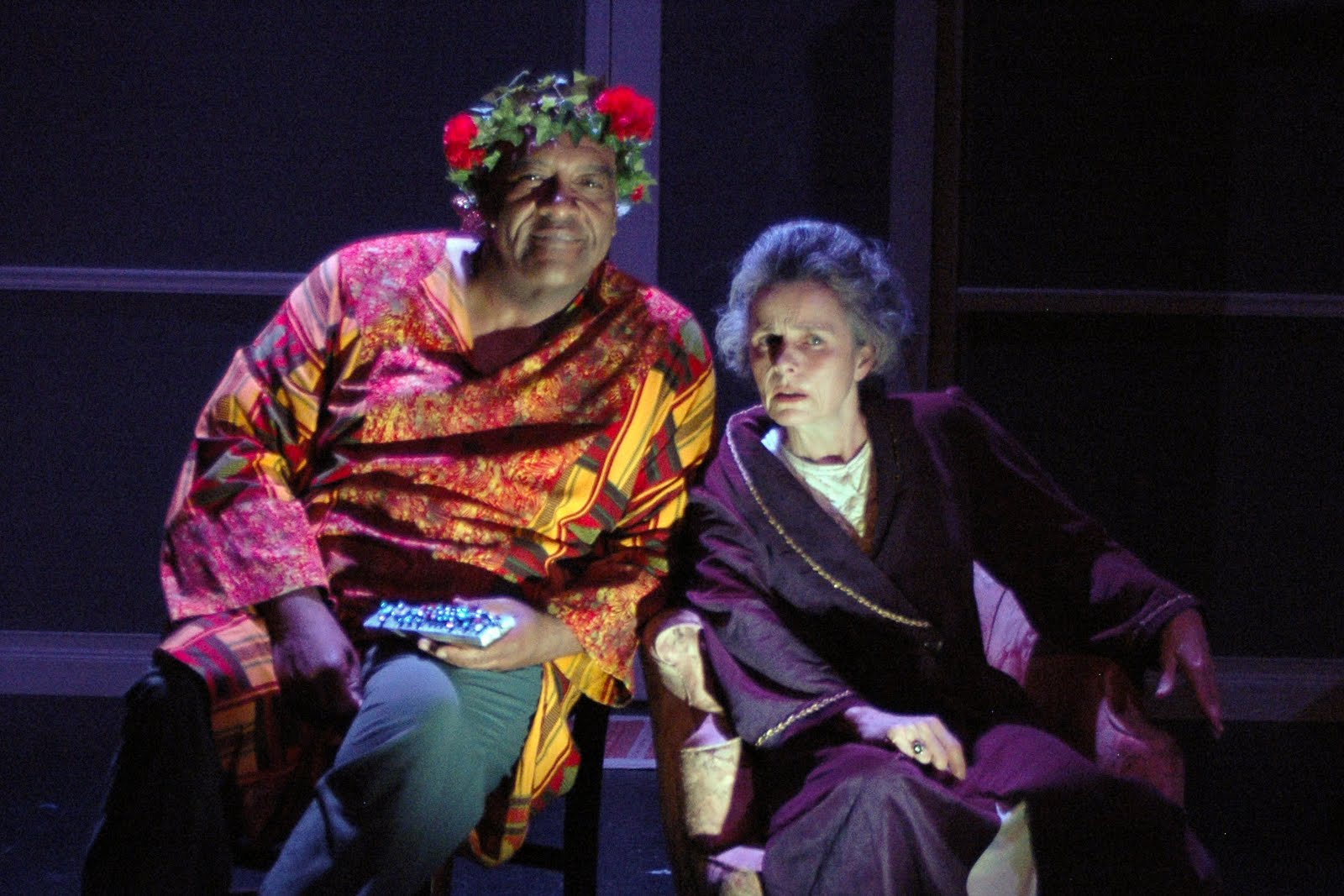
The two diaries have been integrated into one text and will be performed on Saturday, February 12th at 8 p.m. by acclaimed actors Jill Eikenberry and Michael Tucker.  Tickets for this special Valentine’s Weekend event are $50 ($40 for Museum Members) and can be ordered by calling (860) 280-3130.  Admission includes a romantic champagne and chocolate reception and book signing with Eikenberry and Tucker.

Tuesday, January 11, 2011

INVITING THE FOX INTO THE HEN HOUSE


On Friday, January 14th at 5:30 p.m., The Mark Twain House & Museum joins The Harriet Beecher Stowe Center in presenting author Anne Trubek lecturing on her new book.  Presenting authors in conversation is central to our mission.  Seems like a no-brainer, right?  We’re museums dedicated to writers.  Well, in a move that the Hartford Courant calls “counterintuitive programming,” this is no ordinary lecture offering.  In fact, to borrow a great quote from our friends at the Stowe Center, we might be inviting “the fox into the hen house.”  Why is Anne Trubek the fox in this scenario?  Because her book is highly critical of who we are and what we do.

In 2010, Trubek released her much-discussed book A Skeptic’s Guide to Writers’ Houses.  The book is equal parts travel writing, literary history and memoir.  It is also a jeremiad of sorts about house museums dedicated to celebrated writers.  Maybe jeremiad is too extreme a term.  Her book is, at a minimum, a critical look at why and how we preserve the homes of certain writers for public consumption.  In so doing, Trubek feels like the writer’s home becomes a fictional construct – oftentimes made to look as if the writer just stepped away or composed of furnishings not native to the house or history re-written to reflect the writer’s work instead of their lives.  She chronicles her journey to the homes of beloved writers like Mark Twain, Jack London, Ernest Hemingway, Walt Whitman, Louisa May Alcott and Edgar Allan Poe, as well as authors who have fallen into obscurity like Tom Wolfe (no, not that Tom Wolfe) and Paul Laurence Dunbar.

In essence she is asking the question, “What do we hope to get out of a visit to a writer’s house?”  Her thesis:  If you want to know a writer, you read their work.  That seems fairly obvious.  Undoubtedly a reader would get a lot closer to the heart of Mark Twain by reading Life on the Mississippi or his newly-released autobiography than they would by visiting The Mark Twain House.  In Trubek’s estimation, guests to a writer’s house are at the interpretive mercy of curators, overly-enthusiastic or ill-informed tour guides, cash-strapped budgets, urban blight and well-stocked gift shops.  As a result, the effort to get a better appreciation of a writer is often muddied or misguided.  Worse, there are folks who go to historic house with no knowledge or appreciation for the former occupant (eg. Tourists who flock to Hemingway’s Key West retreat to see the cats).

As an employee of the museum, I found reading A Skeptic’s Guide to Writers’ Houses a frustrating and immensely rewarding experience.  We pride ourselves on trying to put together a visitor experience that leaves the guest with a greater knowledge, appreciation and admiration for Mark Twain.  I like to think we do that and I am sure the same goes for our compatriots over at the Stowe Center.  But as I read the book, I saw the validity of many of Trubek’s opinions.  Do we falsify history when we have a piano in the house that is almost exactly like the one the Clemens owned?  Have we implicitly re-written Twain’s history to reflect the characters in his stories?  Do we shortchange audiences by making the Clemens Family’s time in Hartford seem overly happy?  Are we doing Twain a disservice by selling magnets, busts and mugs with his likeness on them?  What story are we telling?  These are all legitimate questions that Trubek challenges us to answer honestly. 

Sometimes on our days off, employees of The Mark Twain House & Museum will go visit other writers’ houses (yes, we’re nerds like that).  Often, these employees will come back and say what the other house did right or what the other house did wrong.  Of course, these opinions are subjective.  Writers’ homes, like their books or poems, are fixed things, but that doesn’t mean they aren’t equally open to a variety of interpretations and readings. 

As the custodians of Twain’s Hartford home and legacy, we are charged with interpreting Twain for a variety of contemporary audiences:  book lovers, school kids, architecture aficionados, tourists looking for something to visit on the way from Boston to New York, hardcore Twainiacs, history buffs, and more.  We cannot be everything to everyone, but we can do our best to honor Twain honestly.  And, sometimes, it is nice to let foxes like Anne Trubek into the hen house to keep us on our toes.

- Jacques Lamarre, Director of Communications

Wednesday, January 5, 2011

The Mark Twain House & Museum Responds to the new "Huck Finn" Controversy

The recent announcement of the NewSouth Books’ upcoming release of The Adventures of Tom Sawyer and Huckleberry Finn – a new edition of the Mark Twain classics that double-yokes the two seminal novels into one text while eliminating the controversial “n”-word and the use of the term “Injun” – has created a firestorm of attention. The novels, which Twain worked on during his time in Hartford, continue to provoke controversy, passion and discussion.

The Mark Twain House & Museum currently has an exhibition entitled Yours Truly, Huck Finn that considers the creation of this enduring classic. The exhibition features first editions, original illustrations, publication history, pop culture representations, and a section on the book being censored and banned. Yours Truly, Huck Finn, which was originally scheduled to close this weekend, has been extended through Sunday, January 16 to allow guests to learn more about the book.

Mark Twain House & Museum Executive Director Jeffrey Nichols states, “Although we admire Dr. Alan Gribben’s scholarship and share his desire to have the books be widely accessible in schools, we encourage readers to experience Mark Twain’s original text whenever possible. Our education department actively works with schools across the country to contextualize the troubling race relations and use of the ‘n’-word during Twain’s lifetime. We invite teachers to contact us if they would like assistance on how to integrate the text into their curriculum in a socially and historically responsible way. We invite the public to visit our current Yours Truly, Huck Finn exhibition to explore why the novel has endured for over 125 years and the house where Twain lived while he created this masterpiece.”


Yours Truly, Huck Finn is sponsored by The Edward C. and Ann T. Roberts Foundation with additional support from the Connecticut Commission on Culture and Tourism and the Greater Hartford Arts Council.

Thursday, December 23, 2010

LOOKING BACK/MOVING FORWARD


2010 was a remarkable year for Mark Twain in general and The Mark Twain House & Museum in particular. Time recently catalogued the “Comebacks of the Year” and included in the list was Twain. Of course, this is funny to folks here at the museum because Twain never truly went away (a necessary ingredient for a comeback). Our Centennial Celebration – the observance of Twain’s death plus his 175th birthday and the 125th anniversary of the U.S. publication of his masterwork Adventures of Huckleberry Finn – only served as a reminder of this giant among men who still walks, speaks and breathes (if a little raspishly after all those cigars) among us.

Two years ago, The Mark Twain House & Museum appeared to be down for the count. Financial difficulties put the future of this National Historic Landmark in doubt. Thanks to generous supporters, a rallying cry from Twain-lovers across the globe, and the dedicated stewardship of a hard-working staff and board, the rough waters were leveled and the ship was righted. But smooth sailing, as any scholar of Twain will tell you, is not what Samuel Clemens was about. His chosen pen name indicates the point at which dangerous passages become safe waters and vice versa. We had to dive into our Centennial Celebration and make a splash.


In order to change the course of The Mark Twain House & Museum, we turned to Sam himself and created a multi-faceted celebration of his life, his times, his interests, his foibles, his family and, of course, his legendary work. Thanks to our generous friends at The Hartford Financial Services Group, our Centennial Sponsor, we were able to hit the ground running in January and haven’t looked back, until now, in the waning weeks of 2010. Some highlights…

  • A performance of Mark Twain Tonight! by the indefatigable Hal Holbrook
  • A far-ranging collaboration with Hartford Stage, Hartford Public Library and Connecticut Public Broadcasting to celebrate Twain and his classic The Adventures of Tom Sawyer
  • The blockbuster success of Autobiography of Mark Twain, Vol. 1 plus a symposium on Twain at St. Joseph College
  • A brand new website that adds more resources for folks looking to know more about Twain and his home in Hartford
  • Authors in conversation including Twain biographers Laura Skandera Trombley, Jerome Loving, Michael Shelden and food historian Andrew Beahrs discussing Twain’s Feast
  • A Centennial Séance that exposed the bunk and chills of Spiritualism (plus a breathtaking Mark Twain House cake created by the Ace of Cakes)
  • Four fascinating exhibitions that explored Twain’s legacy, his house’s architecture, and his seminal works
  • Thousands of children visiting the house and museum for the first time to learn about Twain
  • The launch of the Nook Farm Book Club with the Harriet Beecher Stowe Center
  • A delightful Spring and Fall series of free lectures examining Sam and his obsessions, The Trouble Begins at 5:30
  • Expanding education programs with Capital Prep and Bulkeley High School
  • The debut of Writing at The Mark Twain House classes with Lary Bloom, Suzanne Levine and Susan Campbell
  • Fun and eclectic programs like our Tapping into Twain Oktoberfest, Sam’s Summer Social & Moustache Party, Steampunk Tea Party and Party on the Mississippi.
  • Lectures and programs with national figures such as Rolling Stone’s Matt Taibbi, Tiffany & Co. Design Director Emeritus John Loring, Irish punk rock author Larry Kirwan and Montblanc North America CEO Jan-Patrick Schmitz.
  • Family-friendly events like Tom Sawyer Day, Saturdays with Sam and Stowe & Twain’s Old Fashioned Christmas
  • Popular outreach lecture programs held at libraries and organizations throughout the state by Education Program Manager Craig Hotchkiss
  • Sold-out Graveyard Shift Ghost Tours that probed the darker elements of Twain’s home and history
  • Lively performances by the Ebony Hillbillies, Hartford Opera Theatre, Sea Tea Improv, Varla Jean Merman, HartBeat Ensemble, and dozens of others.
  • A celebration of fellow Connecticut icon P.T. Barnum for the circus impresario’s Bicentennial with a special exhibition plus lecture and family programs
  • …and so much more!

In all, we had over 50 unique events plus mini-exhibitions, collaborations and speaking engagements. And the world sat up and took notice. We’ve had press coverage ranging from local features, regional write-ups and national attention from USA Today, The New York Times, CBS Sunday Morning, Wall Street Journal, Ghost Hunters Academy, among others. We also were profiled by international journalists including the BBC, German Public Radio, Portuguese and Russian magazines, a Japanese newspaper, Australian radio, and an Israeli internet reporter, to name but a few. Special thanks goes to Vault Communications, our amazing PR firm, and the Hartford Foundation for Public Giving for their support of our expanded marketing efforts.


The result of all of this activity and attention? We have experienced a 13% increase in house tour visitation this year and a 16% increase in revenue. In August 2010, we had our highest attendance for a month ever. Program attendance alone has soared over 60% higher than previous years. We’ve grown our membership base and the Mark Twain Museum Store has exceeded its sales goals (thanks due, in no small part, to our new Store Manager Laura Van Dine and the arrival of a certain autobiography).


Another result of all of this activity? We’re exhausted. And planning how to top ourselves. We’ve already announced special programs for early 2011 including a lecture by author Anne Trubek (A Skeptic’s Guide to Writers’ Houses), a visit from humorist Roy Blount, Jr., an evening of R-Rated Twain, and a celebrity reading of Twain’s Diaries of Adam & Eve with Jill Eikenberry and Michael Tucker. We hope that you plan to join us again and again as we look ahead to where Mark Twain will take us. Subscribe to our email newsletter, become a member, follow us on Twitter and/or become a fan on Facebook to keep up-to-date on everything we have in the works. Please know that at the close of our Centennial Celebration that we plan on continuing our efforts to celebrate the man who has given us so much joy.


Thank you to our board, staff, donors, members, visitors, fans and friends for making this an unforgettably awesome year. See you in 2011!


- Jacques Lamarre

Director of Communications

Monday, December 13, 2010

TWAIN & DICKENS

This week, The Mark Twain House & Museum welcomes back HartBeat Ensemble’s play EBENEEZA – A HARTFORD HOLIDAY CAROL. HartBeat’s contemporary twist on Charles Dickens’ beloved Christmas story of compassion lost and redemption found will be performed at The Mark Twain Museum Center on December 17, 18 & 19. In this new adaptation, Mark Twain serves as the Ghost of Hartford’s Holidays Past. This interpolation of Twain and Dickens is not the only time the two literary greats have crossed paths…

Charles Dickens and Mark Twain are iconic authors that are instantly associated with the countries from which they hailed. Both have become legends for work that championed the down-trodden and used humor to skewer the hypocrisies of the wealthy and the ruling class. Dickens’ Great Expectations, Oliver Twist, David Copperfield, Bleak House, and A Christmas Carol have come to define our image of Victorian England. In much the same way, Twain’s major works Tom Sawyer, Roughing It, Huckleberry Finn, Life on the Mississippi and A Connecticut Yankee have become identified with the restless American spirit during the late-1800s. Just as Twain’s term “The Gilded Age” has become the de-facto name for the excesses of Victorian America, the term “Dickensian” has become synonymous with the squalor and hardships thrust upon the poorest of the poor in Industrial Age-England.

Dickens, in a move that Twain would emulate throughout his career, supplemented his income as an author by conducting speaking tours. While Twain’s legendary performances were equal parts stand-up comedy, storytelling and speechifying, Dickens’ appearances were more of a lecture or a reading. Twain’s speaking engagements in England (which were staged by Dickens’ own manager, George Dolby) were every bit the success that Dickens’ found on his two tours of America. What you may not know is that these two legends were in the same room at the same time and never met.

In 1867, Charles Dickens arrived in America for a series of 76 public readings. On December 31st, he was to appear at New York’s Steinway Hall. One of the fortunate ticket-holders to see the most popular novelist of the day was a man on the verge of becoming the most popular writer of his time – Samuel Clemens. The occasion was particularly significant for Sam because it was his first date with his future wife, Olivia Langdon; her parents had purchased the tickets and had invited the young suitor to join them for the lecture.

Twain documented his attendance of Dickens’ reading for the Alta California newspaper in February, 1868. Twain writes about Dickens’ arrival onstage:

“Promptly at 8 P.M., unannounced, and without waiting for any stamping or clapping of hands to call him out, a tall, ‘spry,’ (if I may say it,) thin-legged old gentleman…with side hair brushed fiercely and tempestuously forward, as if its owner were sweeping down before a gale of wind, the very Dickens came! He did not emerge upon the stage -- that is rather too deliberate a word -- he strode. He strode -- in the most English way and exhibiting the most English general style and appearance.”

Twain goes on to assess Dickens:

“His pictures are hardly handsome, and he, like everybody else, is less handsome than his pictures. That fashion he has of brushing his hair and goatee so resolutely forward gives him a comical Scotch-terrier look about the face,which is rather heightened than otherwise by his portentous dignity and gravity. But that queer old head took on a sort of beauty, bye and bye, and a fascinating interest, as I thought of the wonderful mechanism within it, the complex but exquisitely adjusted machinery that could create men and women, and put the breath of life into them and alter all their ways and actions, elevate them, degrade them, murder them, marry them, conduct them through good and evil, through joy and sorrow, on their long march from the cradle to the grave, and never lose its godship over them, never make a mistake! I almost imagined I could see the wheels and pulleys work. This was Dickens--Dickens. There was no question about that, and yet it was not right easy to realize it. Somehow this puissant god seemed to be only a man, after all. How the great do tumble from their high pedestals when we see them in common human flesh, and know that they eat pork and cabbage and act like other men.”

And, finally, Twain assigns a poor review to Dickens’ reading from David Copperfield:

“I was a good deal disappointed in Mr. Dickens' reading -- I will go further and say, a great deal disappointed. The Herald and Tribune critics must have been carried away by their imaginations when they wrote their extravagant praises of it. Mr. Dickens' reading is rather monotonous, as a general thing; his voice is husky; his pathos is only the beautiful pathos of his language -- there is no heart, no feeling in it -- it is glittering frostwork; his rich humor cannot fail to tickle an audience into ecstasies save when he reads to himself. And what a bright, intelligent audience he had! He ought to have made them laugh, or cry, or shout, at his own good will or pleasure -- but he did not. They were very much tamer than they should have been.”

Despite Twain’s tough words, he did possess some admiration for the British legend. While out West in the early 1860s, Sam delighted in reading Dickens’ Dombey and Son. (The Singular Mark Twain, Fred Kaplan, p. 95) According to R. Kent Rasmussen’s Mark Twain A-Z, Twain claimed to read A Tale of Two Cities every two years, visited Dickens’ grave at Westminster Abbey in 1872 and welcomed Charles Dickens, Jr. to his Hartford home in 1887. Close to 143 years after Twain went to see Dickens in New York, the two intersect again in Hartford with HartBeat Ensemble’s performance of Ebeneeza.

Monday, December 6, 2010

An Autobiographical Stroll


Happy Monday morning, dear Twain fans and readers!

This past week was a hootananny here at The Mark Twain House & Museum-- we celebrated Sam's 175th birthday with a Party on the Mississippi, wrapped up our Nook Farm Book Club with a discussion of The Diaries of Adam & Eve, brainstormed about nonfiction in this week's writer's workshop, and took over 500 people through the house during our annual Friends Holiday House Tour. Whew! That was all fantastic but our staff is ready for a long winter's nap.

Luckily, this quiet morning is a fantastic time to get back to the reason we're working so hard: Twain's writing. This is one of my first opportunities to sit down and peruse the best-selling, very recently published, much buzzed about Autobiography of Mark Twain, so we can flip through some sentences together. Ready, dear readers, for a coming attraction of the book?

On the structure of the narrative: "It starts out with good confidence, but suffers the fate of its brethren-- is presently abandoned for some other and newer interest. This is not be wondered at, for its plan is the old, old, old unflexible and difficult one-- the plan that starts you at the cradle and drives you straight for the grave, with no side-excursions permitted on the way. Whereas the side-excursions are the life of our life-voyage, and should be, also, of its history."

On his family: "As I have said, the Clemens family was penniless. Orion came to the rescue."

On first meeting Helen Keller when she was fourteen years old: "Mr. Howells seated himself by Helen on the sofa and she put her fingers against his lips and he told her a story of considerable length, and you could see each detail of it pass into her mind and strike fire there and throw the flash of it into her face."

On politics: "I said that no party held the privilege of dictating to me how I should vote. That if party loyalty as a form of patriotism, I was no patriot, and that I didn't think I was much of a patriot anyway, for oftener than otherwise what the general body of Americans regarded as the patriotic course was not in accordance with my views; that if there was any valuable difference between being an American and a monarchist it lay in the theory that the American could decide for himself what is patriotic and what isn't; whereas the king could dictate the monarchist's patriotism for him..."

If you have the Autobiography, what are some of your favorite lines?

If you don't, and would like one, order it from our store-- it sells out within a few days of each new shipment, so plan ahead for the holidays if you'd like one.

Otherwise, let's hear what you think!

- Julia Pistell
Communications Associate
The Mark Twain House & Museum

Wednesday, November 10, 2010

The Big Top Goes Green


Concurrent with the 2010 Twain Centennial Celebration, The Mark Twain House & Museum has been helping to celebrate the bicentennial of another Connecticut icon this year – P.T. Barnum. The circus impresario and entrepreneurial legend was born in 1810 in Bethel, CT and we have been helping Bridgeport’s Barnum Museum with their year-long party by offering circus-inspired events in Hartford. This Saturday, November 13th at 11 a.m., we welcome ARTFARM, a Middletown, Connecticut based troupe that creates high quality theater with a commitment to environmental sustainability and social justice, and their high-flying Circus for a Fragile Planet. This program is the final of our 2010 "Saturdays with Sam" Family Matinees, so fill your clown car with the kiddies for this unique show!

Imagine a circus in which actors juggle bottled water, polar bears dance on melting ice floes, the props and set are recycled, and the core of clowns are called the Fossil Fools. That’s part of what you get in ARTFARM’s Circus for a Fragile Planet, a brand new educational circus performance featuring juggling, clowning, physical comedy, acrobatics, unicycling, stilt dancing and other circus arts built around a strong environmental message.

The show is written, directed and features ARTFARM co-founder Dic Wheeler, who plays an offbeat Austrian scientist whose attempts at enlightening the audience about critical environmental issues are undermined by three fun loving clowns with an agenda of their own. Featuring a lively contemporary and classical musical score, Circus for a Fragile Planet is a side-splitting, mind-opening blend of circus and science.


The fast-paced, hour-long show has entertained and inspired audiences of all ages. The circus has performed with great success at universities, arts centers, festivals and nature centers. What every audience receives is a terrific small-scale circus which leaves them asking “what changes can I make in my lifestyle to become a more responsible world citizen?” The show addresses issues such as global warming, critical habitat, resource management, alternative energy sources, bottled water, recycling, species sustainability and individual responsibility in a way that is accessible and upbeat, accentuating the positive choices each individual or community can make to help build a better future for the planet. And the company shows up in a colorful bus powered by waste vegetable oil!


Check out ARTFARM in action here!


Tickets for Circus for a Fragile Planet are only $5 for children and $10 for adults. To reserve, call (860) 280-3130 or purchase tickets at the door. "Saturdays with Sam" is supported by Aetna, Hartford Steam Boiler and the Connecticut Commission on Culture and Tourism.

Wednesday, November 3, 2010

This just might be your last reminder. No. I mean it this time.

By Susan Campbell

I'm teaching a course in creative non-fiction at Mark Twain House & Museum from 5:30 to 7:30 p.m. on Wednesdays from Nov. 10 to Dec. 22.

We'll explore the likes of E.B. White (of course), Kay Redfield Jamison, Azar Nafisi, Mark Twain, himself (of course) and many others. Come read some fabulous writers, and work on your own fabulous writing, as well.

The cost is $500 for the six-week course (no class is scheduled for November 24). To register, call Steve Courtney at 860-247-0998, Ext. 243, or email steve.courtney@marktwainhouse.org.

And yes, I'm pretty sure this is the last reminder because time is running out. That is all. Thank you.

Susan Campbell's Dating Jesus won the Connecticut Book Award for Biography/Memoir this year. She is an award-winning columnist at the Hartford Courant, where her work has been recognized by the National Women's Political Caucus, New England Associated Press News Executives, the Society for Professional Journalists, the American Association of Sunday and Feature Editors, the National Society of Newspaper Columnists, and the Sunday Magazine Editors Association. Her column about the shootings at lottery headquarters in March 1998 was part of The Courant's Pulitzer Prize-winning coverage. The mother of two adult sons, she has a bachelor's degree from University of Maryland and a master's degree from Hartford Seminary. She lives in Connecticut with her husband.

Friday, October 29, 2010

So what is Steampunk?


This Saturday at 2:00 (that's TOMORROW!), The Mark Twain House & Museum is thrilled to announce the first of several Steampunk events here at the museum. Our museum center will be filled with gears, goggles, and everything in between. Our host will be Miss Kitty, an elegant local Steampunk expert.

So what is Steampunk, you ask?

Steampunk is a subculture based on the ideas of Victorian science fiction and alternative history. That's a really clunky way to express a beautiful thing, so I will pass the explanations to Miss Kitty herself:

And just what is "Steampunk"? Steampunk is the future as imagined through the eyes of the past. It is mechanical gears and boilers, dirtiness mixed with shininess of brass and copper with the deep red of cherrywood. It is a time for tea and gadgets, airships and ether. Steampunk is a trip to the moon through the barrel of a cannon. It is progeny of Jules Verne and H. G. Wells finding their voice in fiction, fashion and music. Steampunk is all of these things, none of them and more. Steampunk is "punk". One doesn't need to go to the store to buy Steampunk. The do-it-yourself mentality reigns freely. Steampunk is what you make it, but you might want to bring some brass goggles along for the ride.

The Event will include a Victorian style afternoon tea with tea sandwiches, petite pastries, fruit, scones, tarts and other delectables and music, . Attendees are encouraged to come in costume, but it is not required.


Point being: Steampunk is a heck of a lot of fun. Come by and check it out!

Saturday, October 30 · 2:00pm - 4:00pm
The Mark Twain Museum Center
351 Farmington Avenue
Hartford, CT

Tickets for the Steampunk Tea will be $10 ($5 for Twain House members), and tickets for the Zombie panel at 4:00 are $5 (free for members!). Call (860) 280-3130 to buy tickets and/or become a member today!

- Julia Pistell
Communications Associate

Tuesday, October 26, 2010

TWAIN & SHAKESPEARE


This Thursday, Friday and Saturday night, the basement of The Mark Twain House will become a theatre – a spooky theatre, to be sure. Capital Classics, a dramatic troupe known for producing summer open-air productions of Shakespeare in Hartford and West Hartford for two decades, will be presenting A Macabre MACBETH, a special reader’s theatre performance of the Bard’s bloodiest tragedy underground in the Clemens Family’s mansion. This one-hour adaptation receives a Halloween twist by emphasizing the story’s witches, ghosts and bloody revenge.


Initially, A Macabre MACBETH may seem like an odd choice for a Twain Museum program, but one doesn’t have to work too hard to see the connections…

  1. Despite being the first quintessentially American author, Twain loved the British. One only need look at A Connecticut Yankee in King Arthur’s Court and The Prince and the Pauper to see that Twain had a great deal of fun delving into English history and literary styles. His naughty burlesque 1601 is extremely low humor dressed up in stuffy Old English that would have made Chaucer proud (or blush). His trip to Oxford University in 1907 to receive an honorary degree was one of the proudest moments of his life. (Photo: Twain in his Oxford University robes)

  1. It really isn’t a stretch to imagine that America’s greatest author would have tremendous respect for Britain’s most beloved dramatist. Shakespeare pops up via mangled interpretations of Romeo and Juliet, Richard III and Hamlet in the the King and the Duke’s “Royal Nonesuch” in Adventures of Huckleberry Finn. Twain goes to great pains to question Shakespeare as the reputed author of his plays and sonnets in his essay, Is Shakespeare Dead? Despite being a humorous expose that threatens the very foundations of world literature, the essay betrays Twain’s knowledge and appreciation of the Shakespearean canon.

  1. The Mark Twain House has been the site of a number of family theatricals. Olivia Clemens adapted The Prince and the Pauper as a home entertainment often starring her daughters Susy and Clara in the title roles and her husband as Miles Hendon. Susy created an original play entitled The Love Chase, performed by the Clemens girls and friends in the Hartford home’s Drawing Room using the curtained-off entrance to the Dining Room as their backdrop. As part of their home education, the girls would put on short theatricals in the second floor schoolroom (the fans currently on display schoolroom were utilized as props in the shows). The Mark Twain House & Museum’s collection contains Susy’s copies of Shakespeare’s plays. (Photo: c.1884 Susy as the Prince and friend Margaret "Daisy" Warner as the Pauper)

  1. Much of Macbeth’s action takes place in and around ancestral castles in Scotland. On an1873 trip to Scotland, Sam and Olivia Clemens happened upon a fireplace mantle that was created for Ayton Castle in Berwickshire. The ornate, wood-carved mantle was never officially installed in the castle as the man for whom it was designed died before the piece’s completion. The Clemenses purchased it and had it shipped to their Hartford home where it was installed as a centerpiece in the library. Fittingly, Shakespeare’s notorious “Scottish Play” will be performed directly underneath the fireplace mantle. Among the piece's wood carvings are tributes to the arts - an artist's palette, a musical lyre, a writer's scroll and two faces that look suspiciously like the enduring and ancient symbols of the theatre - comedy and tragedy masks.

Capital Classic’s “A Macabre MACBETH” runs Thursday, October 28 at 8 p.m., Friday, October 29 at 10:30 p.m. and Saturday, October 30 at 10:30 p.m. Tickets are $15 and can be ordered by calling (860) 280-3130.